 (916) 652-2223 H (408) 605-4647 C |
You can go on line and read 1000 different opinions about marinating meat. Most read like this: "One of the simplest ways to flavor meat is to marinate it. That is, treat it like a sponge. All you have to do is pour sauce on the food, let it soak for a while and then cook it."
Personally, based upon over 30 years of experience in the kitchen, as well as in the BBQ pits, I don't believe that is true. In fact, even after hours of soaking, most marinades don't penetrate meats like beef, pork or lamb much more than 1/8". A side effect of marinade on meat is a wet surface, which impedes the ability to crisp or obtain a nice char. In short, 'soaking' marinades adversely affect the taste and texture of many meats.
On the other hand, meats such as chicken, turkey, and some pork cuts usually absorb a little more marinade (though not as much as we would like) and fish will literally absorb it like a sponge.
If the marinade contains a lot of salt or acid, they will affect the meat in a different way. Salt is important, as a flavor enhancer, and has good penetrating properties, as well as a conduit for pulling in other flavor components (like brine).
Acids can serve as a kind of marinade; fruit juices (i.e. lemon, apple, pineapple, orange and white grape juice), vinegars, and even sugar-free soft drinks can break down protein, which is a process known as 'denaturing'. However, too much acid, or even a small amount of acid over too long a time can make the surface of the meat mushy, which inhibits crispness or charring.
All that said, some meat cuts absolutely need additional flavoring and even the best cuts of meat can be enhanced with liquids and spices. Up until now, the only feasible alternative to soaking was injecting with an oversized syringe and needle.
Unfortunately, when you go through several cases of meat (pork and beef) each week, the syringe takes too much time, is very hard on your hands and fingers and - quite frankly - it is a real pain. Every time I injected meat, I found myself thinking that there had to be an easier way. After a lot of thought, and a long 'trial and error' process, I found an easier way. In fact, I found the perfect way to add liquid and spice to meat. Inject liquid - marinades, cures, seasonings - into large pieces of meat. Works great for: Pork, Beef, Chicken, Hams, Turkeys, Lamb -- works with any meat you want to add flavor and moisture to. May also be used to inject "Tenderizing Solution" into meat. Please allow me to introduce you to the:
(Patent Pending)
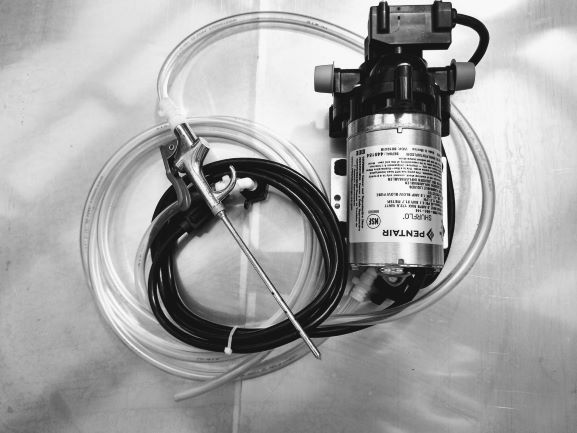
The Auto Pump Injector System is a culinary work of art and engineering excellence. The industrial-quality pump has a thermally protected 115v motor. It is self-priming, and features an automatic shutoff pressure switch; if it runs dry, it will shut off before causing any damage to the pump.

With the Auto Pump Injector System, you can inject a case of pork shoulders in almost less time than it takes to open the case and remove the shrink wrap. Because it is so easy to use, meat gets injected from numerous different angles, which makes it a much more efficient and effective process. In other words, you produce a better product for less time and money.
Clean-up is equally easy: Put the intake hose in hot/soapy water and run the pump for 60 seconds; move the hose to a bleach/water solution and run the pump for 60 more seconds; pump clear water to flush the system. It's that fast; it's that simple.
No professional kitchen is complete without The Auto Pump Injector System; no professional chef can add flavor/spice to meats to the fullest extent without The Auto Pump Injector System.

| Auto Pump Injector System, $275 plus $18.00 shipping (USPS 2-day Priority) to the lower 48 contiguous states | |
| Additional Needle, including shipping, $25: |

First let me say that, in my mind, 'Meathead' is THE premier reviewer in the BBQ industry. He is a successful author of numerous books on BBQ and runs the web site http://www.amazingribs.com.
As Meathead is quick to point out, Amazing Ribs Is All About The Zen Of Barbecue, Grilling, and Outdoor Cooking. However, in that description, Meathead fails to acknowledge all of the thoughtful reviews of equipment related to BBQ, Grilling, Smoking, and Outdoor Cooking. I have purchased several of the items he endorses, and will not buy anything BBQ-related without first checking to see what he has had to say.
One more thought: Scottie Johnson is very well known among the BBQ competitors, and has become one of the names whispered from one team to another when he shows up at a contest anywhere in the country. It's not uncommon to hear, "Did you know Scottie Johnson is here?" or "Hey, the Cancer Sucks Team just pulled in." Scottie has raised a lot of money to fight cancer, and he is certainly someone I respect greatly.
Obviously, I was delighted to learn that Meathead and Scottie Johnson liked my Pork Injector. Unfortunately, they (both) missed one important aspect: the Pork Injector is an excellent piece of equipment for anyone that loves to cook outdoors; it's not limited to contests, catering, or injecting large amounts of pork and brisket. The cleanup is so fast and easy (2 minutes) that it's great for a couple of thick-cut rib eyes, pork chops, or many other dishes you may prepare for the family. In fact, the cleanup is so easy you may find other family members using it to improve the taste of most anything they cook, in or outdoors.
My specially designed proprietary stainless steel needles have twelve holes more than any other injection needle on the market. And they are all in the last 2.5 inches of the needle. This design feature is specifically so that thick cut steaks, thick cut pork chops, or any thick cut meat item can successfully be injected in just seconds. Remember marinades don't penetrate meats like beef, pork or lamb much more than 1/8". A side effect of marinade on meat is a wet surface, which impedes the ability to crisp or obtain a nice char. In short, 'soaking' marinades adversely affect the taste and texture of many meats. So pump that filet, ribeye, or master cut chop, full of your favorite spice and liquid. In fact I inject a warm butter/spice mixture into mine.
Don't miss this opportunity to 'jump start' your next cookout. Big or small, you and your family deserve it.
Now the Reviews:
This motorized "Auto Pump Injector System" is the state of the art and can really save you time and hand cramps if you have a lot of meat to inject. You make up your injection, put it in a bucket or bottle, and lower the intake tube into the liquid. Then just insert the needle, squeeze the trigger gently, and slowly withdraw the needle to disperse the fluid. In minutes the whole job is done.
They sent me one to test, and it worked great, but I don't cook as many pork butts and briskets as competition cooks do, so I promptly passed it along to Scottie Johnson of CancerSucksChicago.com, a team AmazingRibs.com co-sponsors.
He has won the Jack Daniels World Championship Barbecue, no small accomplishment. He said:
"It's awesome. I fumbled around a bit at first, just because it was such a new procedure for me. Once I had it going, the ease of the flow and not having to refill a major plus. Normally your hands get wet and slippery during the process but this device eliminated all of that. No grabbing paper towels to dry my hands during the injection process. And I can see where it would be really super for doing a whole hog or in a restaurant or catering situation."
Keaster's Barbeque
5182 Old Hwy 11, Ste. 5
Hattiesburg, MS 39402
The injector arrived on Tuesday, thanks for the fast shipping and handling.
I had a graduation party I cooked for this weekend did a whole hog. When I was using the injector I was impressed with the way the meat actually ballooned up I went through a gallon of injection, and in previous cooks using a hand injector I was lucky to get a half a gallon into a whole hog.
This past weekend's results were moist and tender from the picnics to the hams everything was juicy and the flavor really popped that was the highlight for me!!!! I had numerous requests for business cards from guest.
I'm very happy. This coming weekend have another grad party doing pork spare ribs and Boston butts and you can bet I'll be using your meat injector as my go to tool.
By the way your meat injector is well worth the money. I did look at others but could not justify the over the top price for multiple needle units. Can you believe they run from $2000.00 to $6000.00 each?
I will be competing in BBQ contest in the near future so keep your eye on Lone Eagle BBQ.
Duane
Alexandria, OH
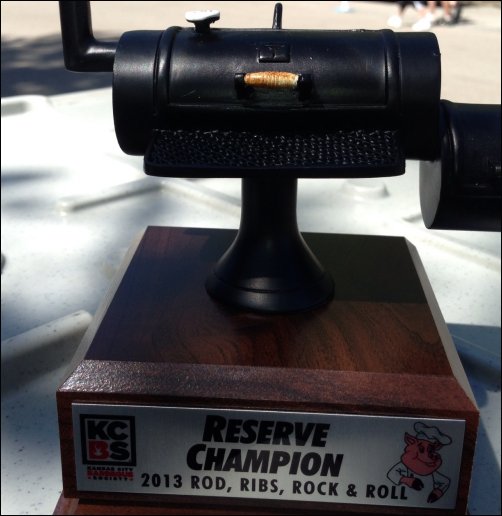
Love using your injector. Gets the product in quickly and efficiently. I like all the ports on the needle too. Now the great news we won Reserve Grand Champion at the Rods, Ribs and Rock and Roll BBQ Competition this last weekend. We got first in Brisket and as you can see from the pictures it was moist and tender. Your injector is the bomb.
Thanks for a great product.
Keith Nebel
Kansas
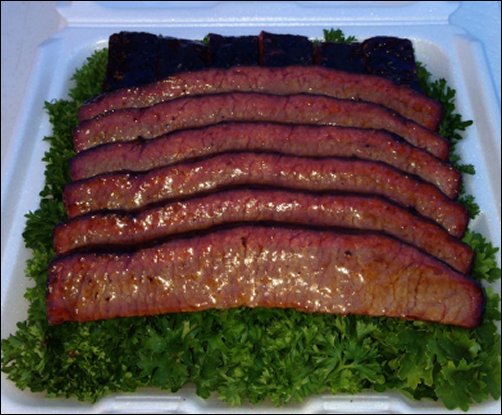

I injected my first pork butt and it is amazing as well as fast, cuts down a ton of time. Thank you for a great product we are using your injector at our store on all the meats we smoke and sell.
Marty Jenkins
Whole Foods Market
Roseville, CA 95678
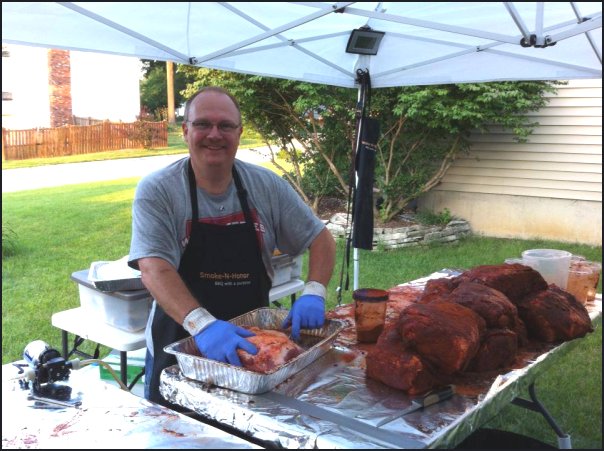
Stel the Pit Master Smoke-N-Honor (www.smokenhonor.com) injects 364 lbs of pork for a fundraiser for Moore, OK tornado victims. The event was put on by the local Rotary club. Stel's next big cook is in central Missouri for a National Guard BBQ before they deploy back to Afghanistan. Note the injector, left front.
I used the injector for the first time on a brisket and two pork butts last weekend for Superbowl Sunday. Wow! What a pleasure it was and how easy it was to use and clean up, I was really impressed. Thank you for the excellent product/customer service.
Steve Jensen
Guthrie, OK
My wife and I farm in West Central WI and process our own, some relatives', and my two friends' meat, (the two that are worth all this work). I was looking for an affordable alternative to the hand syringe when I found your web site. After a long day of butchering, I always rather dreaded doing the injecting.
But now thanks to you for inventing the "Meat Injector"! It is a major time saver, and a welcome tool.
A neighbor wanted me to make him a hundred pounds of bacon. I ordered the pork bellies Saturday, saw your pump on line Sunday, and ordered it. The bellies came Tuesday and were thawed enough by the time our mail came Thursday to inject the brine. When the mail arrived, there was our new injector. My wife mixed up the brine, I put the belly slabs four deep in tubs (the depth the needle reaches), and we started pumping. In a matter of minutes, we had injected five gallons of the brine and cleaned the pump. Wow, thanks again!!!
With the electric pump I am sure that this Fall when we process our pigs and venison, a lot more of it will be vacuum sealed with some tasty recipe injected into it.
Dean
Q: Can I run the pump without any liquids?
A: Yes, for a limited amount of time, but not for an extended period.
Q: Will this system pump solids?
A: No. All spices should be blended in a liquid (i.e. fruit juices, water, vinegars, soft drinks) until completely dissolved. Never use any liquid that has a greater viscosity than orange juice, and never pump fatty or grease-laden liquids with this pump. Read this information on Pepper, carefully before adding it to liquids. Note that Pepper will not dissolve no matter what liquid you add to it or how long you blend it. And it may clog your injector hose or control valve. So if you need to add pepper, try using a mortar and pestle rather than a pepper grinder. It really does come out differently, and for the better. It will change the way you view pepper forever.
Q: How do I clean the outside of the pump?
A: Note the pump should always be used on a GFI circuit. After unplugging the pump, simply wipe it off with a damp towel. NEVER submerge the pump, as it is an electrocution hazard and will void the warranty.
Q: Will the Auto Pump Injector System use more spice and liquid than the soaking method?
A: Yes because it becomes easier to add the liquid/spice mixture to your favorite cuts of meat. The job is no longer tedious and painful. The average kitchen employee will be more conscientious when injecting meats and therefore the meat gets more and a wider disbursement of liquid and spice. When your kitchen staff sees how much the meat swells with each injection they will tend to inject closer together and at many different angles. But all of these are positive not the negatives of the old hit and miss way of injecting meats.
Q: What cuts and types of meats can I inject?
A: Almost any type and cut, thick cut Bone on Pork Chops, Pork Shoulders, Pork Loins, Hams, Beef Brisket, Prime Rib, Rib Roast, Top and Bottom Rounds, Chuck, Plate, Sirloin, Filet Mignon, New York Strip, and Shank. Any solid muscle meats may be injected. The needle holes are only in the last 2 inches of the needle, so that even smaller cuts of steaks and pork chops may be injected.
Q: Are the pump parts NSF approved?
A: Yes all parts are NFS 51 and NFS 61 approved.
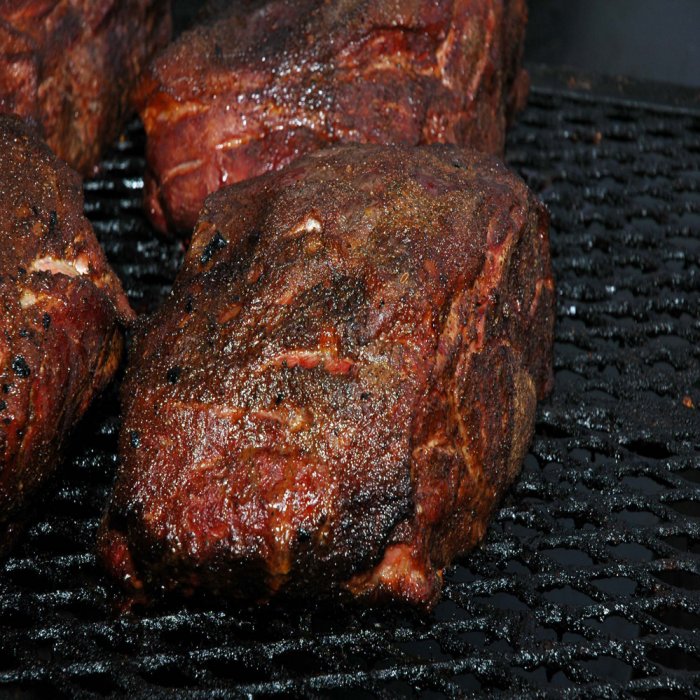
After injection you'll serve the perfect Smoked Pulled Pork Sandwich, so juicy and tender that just one is never enough.
If you have any other questions, please feel free to contact us.
The Dr of BBQ
4000 Hunters Dr.
Loomis, CA 95650
(916) 652-2223 H (408) 605-4647 C
jackson2223@sbcglobal.net
Photography by John Peart
Some Great Pork Injection Recipes, but don't limit yourself to what others are doing; Build your favorite Pork Injector Recipe from your favorite spices.
Please note I have tried to give credit on these recipes, or web sites as they apply.
Chris Lilly's Six-time World Championship Pork Shoulder
Recipe By : Chris Lilly of Big Bob Gibson's
Pork injection
3/4 cup apple juice
1/2 cup water
1/2 cup sugar
1/4 cup salt
2 tablespoons Worcestershire
------------
1 whole pork shoulder (approximately 6 -8 pounds)
1 bottle Big Bob Gibson Championship Red Sauce (or substitute your favorite BBQ sauce)
Inject pork shoulder evenly with injection solution. Apply a generous amount of rub onto meat. Pat so the rub will adhere. Place in a smoker and cook
Apple Injected Smoked Pork
Ingredients
- 2 cups apple cider
- 2 tablespoons Neely's Dry Rub Seasoning
- 2 tablespoons apple cider vinegar
- 2 tablespoons honey
- 1/2 teaspoon cayenne pepper
- 1/4 cup orange juice
- 1/2 cup lemon juice
- Dash Worcestershire sauce
- 2 teaspoons kosher salt
- 1 (6 to 8-pound) pork butt
Directions
Special Equipment: Pork Injector and apple wood chips soaked for 1 hour
In a large bowl, whisk together all the ingredients for the marinade.
Put the pork on a tray and inject 3/4 of the way into the pork. Inject the meat in several places with the marinade. Pour the remaining marinade over the meat. Cover with plastic wrap and refrigerate for 2 to 12 hours, so flavors can permeate.
Preheat a grill to 275 degrees F, using indirect heat and apple wood soaked chips.
Drain off excess liquid from the meat and pat dry with a towel. Season the pork with Neely's Dry Rub seasoning, to taste, making sure you cover the sides. Arrange on the grill with the fat side facing up. Grill until the meat is tender, transfer to a serving platter and serve.
From http://bbq.about.com/od/marinaderecipes/r/bl21026a.htm
This is great with any kind of poultry, particularly turkey.
- 1/2 cup chicken broth
- 2 tablespoons butter
- 1 tablespoon lemon juice
- 1/2 teaspoon garlic powder
- 1/2 teaspoon finely ground pepper
- salt to taste
Preparation:
Melt butter in a small saucepan. Add remaining ingredients, except the salt. Mix well. Add salt until mixture has a slightly salty flavor. Allow to cool enough to work with and load into meat injector.
From http://www.grilling.com/home/article/3743/
Tips from the Pros: Injecting Pork
Unlike marinades which take time to fully penetrate the meat, injections are a quick way to introduce a whole new level of flavor to bigger cuts of meat such as pork picnics and pork butts (collectively referred to as the pork shoulder).
When creating your injection, try to stick with flavors that complement and don't overwhelm the particular cut of meat (apple works well with pork for example so the use of apple juice and/or apple cider vinegar works well).
If using dry ingredients such as rubs or ground peppers and spices, make sure that they are fully dissolved before injecting in to the meat as they can clog the injection needle.
Also, darker ingredients such as soy sauce and Worcestershire sauce can leave streaks in the meat which may be alright for friends and family but can cost precious points in a barbecue competition.
There are also various flavor and moisture enhancers available in the market from such manufacturers as FAB and Butchers, and no need to limit their use to the contest scene. Once created, inject the mixture evenly throughout the shoulder using a BBQ marinade injector.
To get you started, here's a recipe for a basic pork shoulder injection.
Pork Injection
- 2 cups Apple Juice
- 1/4 cup water
- 1/2 Cup Apple Cider Vinegar
- 1/2 tbsp garlic salt
- 2 tbsp Worcestershire sauce
- 2 tsp onion powder
- 2 cubes pork bouillon
Mix ingredients in a pot over medium high heat and bring to a simmer while stirring frequently to blend. Remove from the heat and allow the injection to cool completely before injecting in to raw meat.
To inject, place the tip of the needle in to the in to the meat, inject the liquid in to the shoulder by pushing down on the lever, and slowly pull the needle out in order to maximize each injection.
Repeat in various portions of the shoulder until injection is evenly dispersed. (note: be aware that the shoulder can spring a leak while injecting.
Note that Pepper will not dissolve no matter what liquid you add to it or how long you blend it. And it may clog your injector hose or control valve. So if you need a pepper type addition try using a mortar and pestle rather than a pepper grinder. It really does come out differently.
...
 |
This site is a member of The Smoke Ring
Next BBQ Site - Next 5 BBQ Sites - Prev BBQ Site - Random BBQ Site Join the BBQ ring or browse a complete list of The Smoke Ring BBQ member sites The Smoke Ring - All you need to know about Barbecue A service of netRelief Consulting |